How to Find Reliable NEMT Providers: A 2026 Guide
Table of Contents
Last Updated: October 2, 2026
Step 1: Confirm Your Eligibility and Transportation Benefits
The fastest way to find reliable NEMT providers is to start with what your insurance already covers. Non-emergency medical transportation, or NEMT, is a paid ride to a medical appointment when you are not having an emergency. Many people pay out of pocket for rides that their plan already covers.
Medicaid may cover rides to covered medical care, often through a managed care plan.
Medicare usually does not cover routine rides, but some Medicare Advantage plans add them.
Veterans benefits may cover travel to approved VA appointments.
Medicaid and Medicare Coverage for Non-Emergency Medical Transportation
Medicaid transportation benefits vary by state and by plan. Many states run NEMT through a broker, while others let you choose your own provider. The Medicaid.gov guidance on non-emergency medical transportation explains that states set their own rules for who qualifies and how rides get booked.
Private Insurance and Veterans Benefits
Private plans sometimes cover medical transport when a doctor documents the need. Ask your insurer: does my plan include transportation benefits, and does it require prior approval?
Pro Tip Ask for the benefit in writing. A quick email confirming your ride coverage saves arguments later when a bill shows up.
Step 2: Know the Difference Between NEMT Brokers and Direct Providers
A broker books the ride and sends a contracted driver. A direct provider owns the vehicles and employs the drivers. Both can work well, but the difference shows up on the day of the trip, not at booking.
Here is the trade-off in plain terms:
Factor | Brokerage Model | Direct Provider |
Who you call | Dispatch center | The company itself |
Vehicle consistency | Varies by contract | Same fleet each time |
Driver familiarity | Often changes | Usually consistent |
Service area | Broad, patchy | Focused, defined |
Accountability | Split between parties | One company owns the trip |
Who holds the operating authority | The subcontractor who shows up | The company you booked |
Who you file a complaint with | The broker, who relays it | The company directly |
How Broker Dispatch Actually Works
When you call a broker, a dispatcher assigns your trip to whichever contracted company has a vehicle available in that ZIP code and time window. You are not choosing the company, the broker is.
That matters for three reasons:
The vehicle you get is not guaranteed. A broker may confirm a wheelchair-accessible van, then dispatch a sedan if the accessible vehicle is late. Ask for the vehicle type in writing.
The driver's training is the subcontractor's responsibility. The broker verifies operating authority and insurance, but training happens at the subcontractor level. Ask which company is assigned, then vet it as you would a direct provider.
Liability is layered. If a wheelchair is damaged or a transfer goes wrong, the broker's contract with the subcontractor determines who pays. Ask in writing which entity carries liability for injury and property damage.
When a Direct Provider Is the Safer Choice
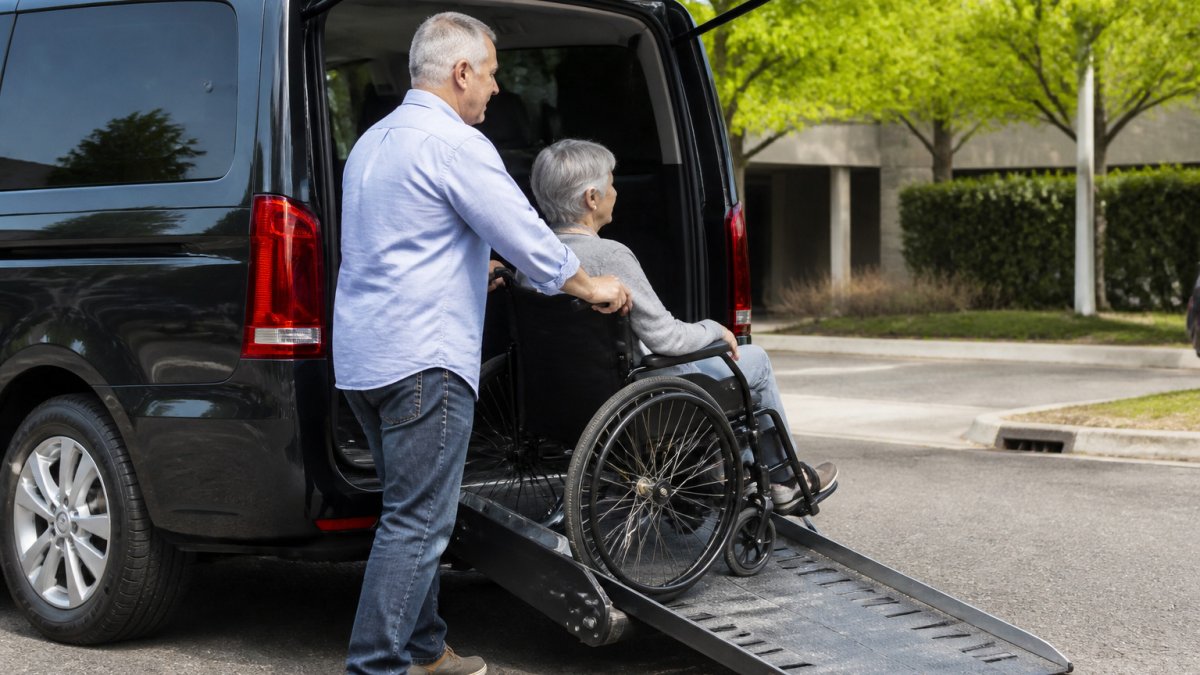
If you use a wheelchair and need a specific lift or tie-down setup, a direct provider is often the safer bet: the company that answers the phone owns the van, employs the driver, and carries the insurance, with no relay between parties.
Questions That Reveal Which Model You Are Dealing With
Many companies operate as both a broker and a direct provider, so the website label is not enough. Ask these questions on the first call:
Will the driver who picks me up be an employee of your company, or a subcontractor?
If it is a subcontractor, what is that company's name, and can I speak with them before the trip?
Who holds the commercial auto insurance policy for the vehicle that will arrive?
If the assigned vehicle cannot make the trip, what is your backup plan?
Who do I call if the driver is late, you, or the subcontractor?
Pro Tip If you are booking through a state Medicaid broker, you usually cannot choose the subcontractor. In that case, ask the broker for the assigned company's name at least 24 hours before the trip, then call that company directly to confirm the vehicle type and driver training.
A Note on State Medicaid Brokers
Many states contract with a single statewide broker to manage NEMT for Medicaid enrollees, so you call the broker, not the provider. The model standardizes billing and coverage verification, not vehicle or driver guarantees. If your trip needs a stretcher, bariatric-capable vehicle, or specific equipment, tell the broker at booking and get written confirmation that the assigned company can meet it, a text or email is enough.
Step 3: How to Vet Reliable NEMT Providers for Safety and Quality
Vetting comes down to four checks: licensing, insurance, driver training, and vehicle condition. Ask for proof of all four before you book; a provider that hesitates on any is one to skip.

Licensing, Credentialing, and ADA Compliance Checklist
Credentialing means the company has verified its drivers, insurance, and operating authority. Run through this list before your first ride:
State business license and operating authority on file
Current commercial auto insurance, with limits shared on request
Wheelchair-accessible vehicles with working lifts or ramps
Tie-down straps and lap-and-shoulder belts in every accessible van
Drivers trained in wheelchair securement and passenger assistance
Written safety protocols and incident reporting process
ADA-compliant service for riders with disabilities
Driver Training and Safety Protocols
Driver training separates a professional service from a rideshare app. Good drivers know how to secure a wheelchair, assist with a transfer, and handle equipment like oxygen tanks.
Watch Out Never ride with a provider that cannot name its tie-down procedure. An unsecured wheelchair can shift during a turn and injure the passenger. That risk is not worth a cheaper fare.
Step 4: Understand Costs and Insurance Navigation
Cost transparency is where most riders get surprised. Prices depend on distance, vehicle type, wait time, and whether you pay privately or through a plan. Transfer 4 U does not publish flat rates because every trip is different. Ask any provider for a written quote before you book.
What Actually Drives the Price of a Private-Pay NEMT Trip
Most private-pay NEMT providers build a quote from a handful of line items. Knowing them lets you compare quotes apples to apples.
Base fee. A flat charge for showing up, usually covering the first few miles. Ask whether it applies if the trip is canceled at the door.
Mileage. Charged per mile beyond the base. Ask whether mileage is one way or round trip, the difference can double a quote.
Vehicle type. A sedan or ambulatory van is least expensive; a wheelchair-accessible van with a lift costs more; a stretcher van or bariatric-capable vehicle costs the most because equipment and staffing requirements are heavier.
Level of assistance. Curb-to-curb is the base service. Door-to-door, door-through-door, and transfer assistance each add labor time and may carry a surcharge.
Wait time. Most providers include a free window, often 15 to 30 minutes, then charge by the quarter hour. Ask what the free window and per-unit charge are.
After-hours and weekend surcharges. Early dialysis runs and weekend appointments often carry a premium. Ask whether your quote applies to the day and time you actually need.
Additional passengers or equipment. A companion, service animal, or extra luggage may or may not add cost. Ask before you book.
Fee-for-Service vs. Brokerage Model Pricing
Fee-for-service means you or your plan pays per trip, with rates reflecting mileage and assistance level. Brokerage pricing is set by the broker's contract, and the provider is paid from that pool.
Model | Who sets the rate | What you should ask |
Fee-for-service | The provider | Is there a base fee plus mileage? Is mileage one way or round trip? |
Brokerage | The broker contract | Is my ride covered, or will I be billed? What is my copay, if any? |
What You Owe When Insurance Covers the Ride
Coverage does not always mean zero cost. Three charges can still land on you even when a plan or broker authorizes the trip:
Copays and coinsurance. Some Medicaid managed care and Medicare Advantage plans charge a small transportation copay. Ask your plan what your share is before the trip.
No-show and late-cancellation fees. If you are not ready when the driver arrives, or cancel inside the provider's window, the provider may bill you directly. Ask what the window is, commonly a few hours, but it varies.
Wait-time overages. If your appointment runs long and the driver waits beyond the free window, the overage may not be covered. Ask whether the provider bills the plan or you for extra wait time.
How to Handle a Surprise Bill
If a bill arrives for a trip you believed was covered, work through these steps in order:
Call the provider's billing office and ask for an itemized statement showing exactly what was charged and under whose authorization.
Call your plan or the broker and ask whether the trip was authorized and what your financial responsibility is. Get the answer in writing.
If the plan says the trip was covered, ask them to reprocess the claim or issue a coverage determination, and keep the reference number.
If the plan denies the claim, you have the right to appeal. The Medicare complaint and appeal process explains the process for Medicare and Medicare Advantage. For Medicaid, contact your state Medicaid office or your managed care plan's member services line.
If the provider billed you for a covered trip, send the plan's written coverage confirmation to the billing office and ask them to rebill the plan.
Watch Out Never pay a NEMT bill before you have an itemized statement and a written answer from your plan about whether the trip was covered. Paying first can make it harder to recover the money later.
Getting a Quote You Can Compare
When you call for a quote, give the dispatcher the same information every time: pickup and drop-off addresses, appointment date and time, vehicle type, assistance level, and whether a companion is riding along. Ask for the quote in writing, including base fee, mileage rate, free wait window, and any surcharges for your day and time.
Step 5: What to Expect from Door to Door Medical Transportation
Door to door medical transportation means the driver helps you from your front door to the vehicle, and from the vehicle into the appointment, more than curb-to-curb service, where you meet the car at the street.
A few things to confirm when you book:
Will the driver come inside to help, or wait at the door?
How long will the driver wait if your appointment runs late?
Can the van carry a service animal, oxygen, or a walker?
Is there a charge for extra wait time?
Key Takeaway Door-to-door service is the standard to look for if you use a wheelchair or need physical help. If a provider only offers curb-to-curb, ask how they handle transfers.
Step 6: Questions to Ask NEMT Companies Before You Book
A short phone call tells you more than any website. These questions surface the details that decide whether a ride goes smoothly.
Are you licensed and insured in my state?
Do your vans have working lifts and tie-downs?
Are your drivers trained in wheelchair securement?
Do you offer door-to-door assistance?
Can you handle oxygen tanks, walkers, or a service dog?
What is your cancellation policy, and is there a late fee?
How do you handle a same-day appointment change?
Who do I call if the driver is late?
Step 7: How to Resolve Complaints and Provide Feedback
A good provider wants to hear when something goes wrong. Ask up front how to file a complaint and how long a response takes. Keep the trip date, driver name, and vehicle number handy.
Frequently Asked Questions
Does Medicare cover non-emergency medical transportation?
Original Medicare (Part A and Part B) generally does not cover non-emergency medical transportation unless it is part of an inpatient hospital stay or certain managed care plans. Some Medicare Advantage plans may offer transportation benefits as a supplemental benefit. Medicaid, however, often covers NEMT for eligible beneficiaries. Check with your specific plan or state Medicaid office to confirm your coverage.
How do I verify if an NEMT company is properly licensed?
Start by asking the provider for its business license and any required state or local permits for medical transportation. Verify insurance coverage, including liability and workers' compensation. Check if drivers have passed background checks and hold a valid driver's license with any necessary endorsements. You can also ask for references from other healthcare facilities or patients. For door to door medical transportation, confirm the company meets ADA compliance standards for wheelchair accessibility.
What is the difference between an NEMT broker and a direct provider?
An NEMT broker coordinates rides by contracting with multiple transportation companies, while a direct provider owns and operates its own vehicles and drivers. Brokers may offer broader service areas but can have less control over quality. Direct providers often deliver more consistent service and accountability. When searching for reliable NEMT providers, ask whether you are speaking with a broker or the actual company that will send the vehicle.
How can I check the reliability of a wheelchair-accessible transport service?
Ask about on-time performance records, vehicle maintenance schedules, and driver training programs. Request references from current or past clients, especially those with similar mobility needs. Confirm the company's dispatch center uses real-time tracking and has a clear cancellation policy. Reliable providers will openly share safety protocols and accessibility features, such as wheelchair securement systems and door-to-door assistance.
Finding a ride you can count on takes a little homework, and that homework pays off every appointment. Transfer 4 U provides non-emergency medical transportation built for wheelchair users, with door-to-door help, space for medical equipment and pets, and service across Maryland. Our team handles hospital discharges, medical visits, and errands with care, so you and your loved ones can stop worrying about the ride. Contact Transfer 4 U to book a trip and travel with confidence.
Contact Us


Comments